Click on the slide!

Upcoming Leaders

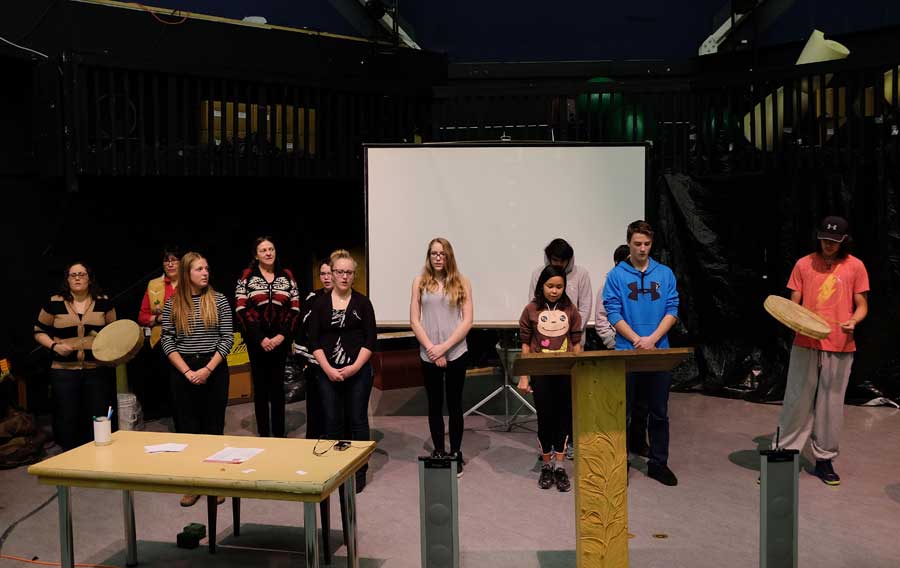
As part of the Liard First Nation's three year regional treatment strategy, citizens of all ages from Watson Lake are being asked to discuss their vision for a healthy community, including the priorities and ways to stop the community's alcohol and drug problems. Youth workshops were delivered in November 2009 to Grades 5‐12. In total, there were 91 students who participated in five workshops over three days. This report documents the results of the Youth sessions, including a Youth survey. Targeting the strengths of the community, Youth were asked for their opinions on what They liked about Watson Lake and how they describe a healthy community. Youth visualized their visions for a healthy community by creating individual art collages. Youth were also provided the opportunity to share and discuss their issues and concerns around alcohol and drugs, and what ideas and solutions they had to overcome these, including prioritizing them in terms of the greatest impact as a way to assess potential Youth action priorities. Summary highlights of the Youth engagement are as follows: 1. Community strengths: Youth particularly like the snow and all the activities it providessuch as skiing, snowboarding, skidooing, trapping, hockey, skating, and sledding. Summer and organized activities are also popular, with the Youth enjoying swimming, soccer, skate boarding, running, hunting, hiking, fishing, dirt biking and clubs. They appreciate the community's attractions and facilities and of course, friends and family.However, many Youth do not think Watson Lake is fun, because of the lack of things to do, and the presence of drugs and alcohol. 2. Description of a healthy community: Youth describe a healthy community as one free of drugs and alcohol, created by removing drug dealers, alcohol runners, and the liquor store. Youth also want an active community in which citizens are physically healthy, eat well and are non-smokers. A healthy, clean and safe environment is also important, one in which people respect each other, there are lots of jobs and community services which meet the needs of the citizens, there is no violence, and families are healthy and responsible. References to the environment, working together, healthy parents, eliminating violence, community infrastructure and services, and having police presence were also noted. 3. Vision for a healthy community: A healthy community is one in which citizens can maintain an active and healthy lifestyle, such as making healthy choices and living life to the fullest. The community should offer an abundance of recreational activities. Youth also recognize the importance of ‘community', and define that many ways, including having support and creating a deeper sense of belonging, respect and caring, having faith, love and peace, being happy and true to oneself, staying in school, and being employed. 4. Issues and concerns around alcohol and drugs: Youth recognize that the community has alcohol and drug problems, and the majority recognize it as a serious to critical issue. Youth identify alcohol and drugs issues as both community and individual problems because they affect Youth as well as parents and community members in a negative way. Issues around alcohol mainly focus on the number of teens drinking and that they are drinking too much. Access to alcohol is too easy, through bootleggers and parties, facilitated by having a liquor store in town. The issues around drugs are similar, in that there are too many drugs and drug dealers in town, making it too easy for Youth to access. Unhealthy habits and parent/family issues are also identified as key concerns. In terms of violence, Youth are somewhat to extremely concerned about the effect of alcohol and drugs on violence in their community and in their families. 5. Ideas and solutions around alcohol and drugs: Besides simply staying away from alcohol and drugs, most of the solutions to alcohol and drug issues relate to increasing the number of activities (programming), with the Youth providing examples like Youth gatherings as well as organized (more sports, dance classes) and individual (reading and writing) activities and workshops. Youth also suggested increasing the voice of Youth through a newsletter and website, Youth Council and Youth summit. Youth think that adapting more healthy habits and having role models and Youth mentors, as well as someone to listen to Youth would help. This includes having a supportive community that provides services such as treatment programs, policing and infrastructure such a treatment centre. Finally, Youth suggested anti‐bullying and violence workshops, and having a safe place to go for help if needed. These results will be included in the larger three year strategy report to be completed in March 2010. Here is a link to the whole report; Youth Report 10 Year Plan Visit our Youth Report 10 Year Plan photo gallery! Recent newsletters; newsletter #5

Click on the slide!

Engaged in the Struggle

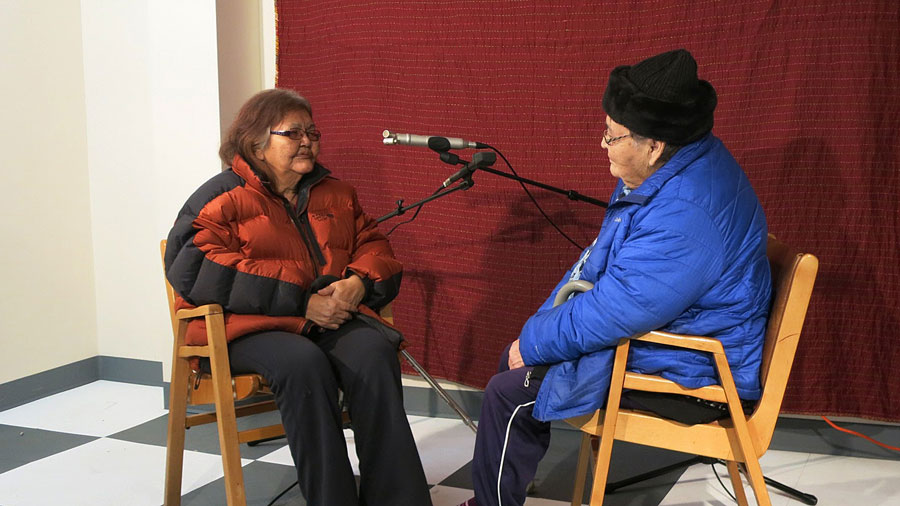
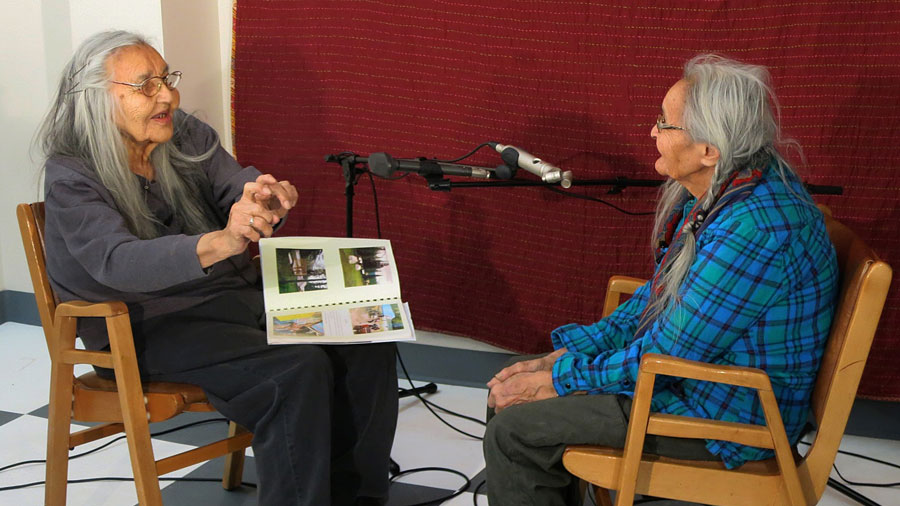
In April 2008, the Liard First Nation (LFN), under the project leadership of the Liard Aboriginal Women's Society (LAWS), launched a community-based process with the Kaska community and individuals of the Town of Watson Lake to identify a path leading to a healthy community. We wanted to answer questions on how best to address the epidemic problem of alcohol and drug addiction in our community.  This two-year process was funded by the Northern Strategy Trust Initiative to complete a three-year treatment strategy.  Beringia Community Planning Inc. was hired to assist with planning facilitation, research, analysis, and documentation. Based on our participatory five-phase planning process, we engaged over 256 individuals including Elders and youth, women and men, Kaska Chiefs and Councils, the Mayor and Council of the Town of Watson Lake, principals and teachers, and health professionals, organizations and agencies involved in the health and well-being of our community.  This was a tremendous effort. After two years of engaging individuals through talking, questioning, drawing, listening, storytelling, researching, and writing, we are celebrating the completion of our Regional Treatment Strategy.
Click on the slide!

Participation!

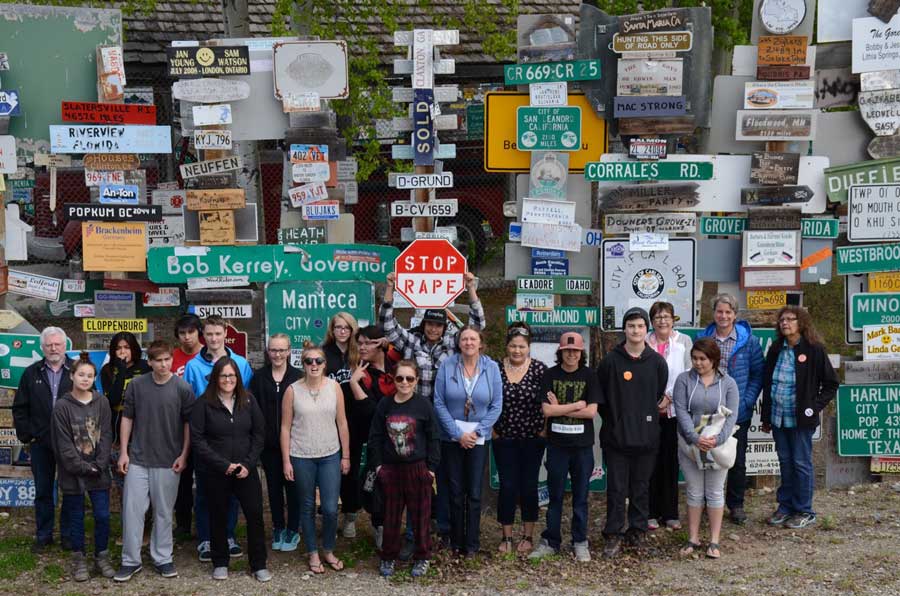
In April 2008, the Liard First Nation (LFN), under the project leadership of the Liard Aboriginal Women's Society (LAWS), launched a community-based process with the Kaska community and individuals of the Town of Watson Lake to identify a path leading to a healthy community. We wanted to answer questions on how best to address the epidemic problem of alcohol and drug addiction in our community.  This two-year process was funded by the Northern Strategy Trust Initiative to complete a three-year treatment strategy.  Beringia Community Planning Inc. was hired to assist with planning facilitation, research, analysis, and documentation. Based on our participatory five-phase planning process, we engaged over 256 individuals including Elders and youth, women and men, Kaska Chiefs and Councils, the Mayor and Council of the Town of Watson Lake, principals and teachers, and health professionals, organizations and agencies involved in the health and well-being of our community.  This was a tremendous effort. After two years of engaging individuals through talking, questioning, drawing, listening, storytelling, researching, and writing, we are celebrating the completion of our Regional Treatment Strategy.
Click on the slide!

Committed Members

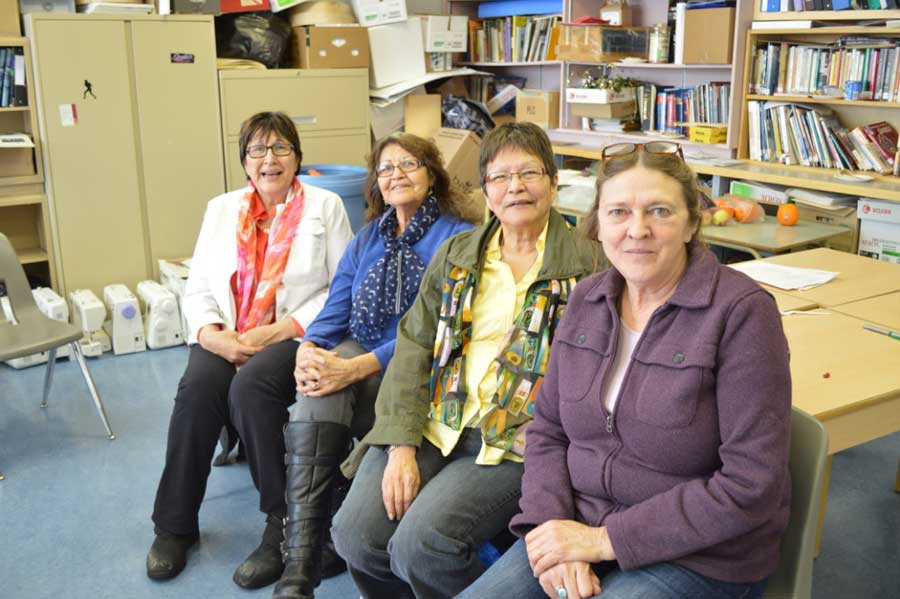
In April 2008, the Liard First Nation (LFN), under the project leadership of the Liard Aboriginal Women's Society (LAWS), launched a community-based process with the Kaska community and individuals of the Town of Watson Lake to identify a path leading to a healthy community. We wanted to answer questions on how best to address the epidemic problem of alcohol and drug addiction in our community.  This two-year process was funded by the Northern Strategy Trust Initiative to complete a three-year treatment strategy.  Beringia Community Planning Inc. was hired to assist with planning facilitation, research, analysis, and documentation. Based on our participatory five-phase planning process, we engaged over 256 individuals including Elders and youth, women and men, Kaska Chiefs and Councils, the Mayor and Council of the Town of Watson Lake, principals and teachers, and health professionals, organizations and agencies involved in the health and well-being of our community.  This was a tremendous effort. After two years of engaging individuals through talking, questioning, drawing, listening, storytelling, researching, and writing, we are celebrating the completion of our Regional Treatment Strategy.
Click on the slide!

Involved Youth

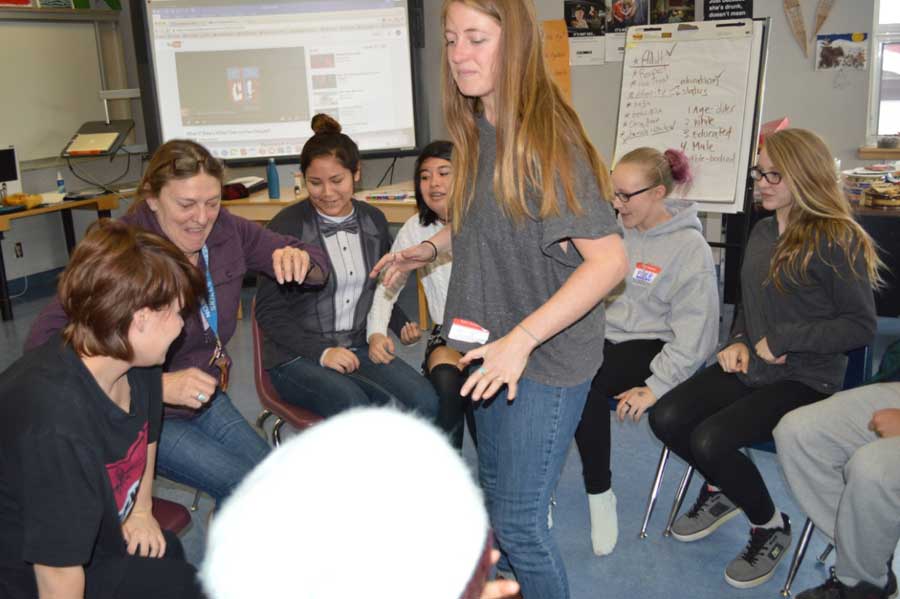
As part of the Liard First Nation's three year regional treatment strategy, citizens of all ages from Watson Lake are being asked to discuss their vision for a healthy community, including the priorities and ways to stop the community's alcohol and drug problems. Youth workshops were delivered in November 2009 to Grades 5‐12. In total, there were 91 students who participated in five workshops over three days. This report documents the results of the Youth sessions, including a Youth survey. Targeting the strengths of the community, Youth were asked for their opinions on what They liked about Watson Lake and how they describe a healthy community. Youth visualized their visions for a healthy community by creating individual art collages. Youth were also provided the opportunity to share and discuss their issues and concerns around alcohol and drugs, and what ideas and solutions they had to overcome these, including prioritizing them in terms of the greatest impact as a way to assess potential Youth action priorities. Summary highlights of the Youth engagement are as follows: 1. Community strengths: Youth particularly like the snow and all the activities it providessuch as skiing, snowboarding, skidooing, trapping, hockey, skating, and sledding. Summer and organized activities are also popular, with the Youth enjoying swimming, soccer, skate boarding, running, hunting, hiking, fishing, dirt biking and clubs. They appreciate the community's attractions and facilities and of course, friends and family.However, many Youth do not think Watson Lake is fun, because of the lack of things to do, and the presence of drugs and alcohol. 2. Description of a healthy community: Youth describe a healthy community as one free of drugs and alcohol, created by removing drug dealers, alcohol runners, and the liquor store. Youth also want an active community in which citizens are physically healthy, eat well and are non-smokers. A healthy, clean and safe environment is also important, one in which people respect each other, there are lots of jobs and community services which meet the needs of the citizens, there is no violence, and families are healthy and responsible. References to the environment, working together, healthy parents, eliminating violence, community infrastructure and services, and having police presence were also noted. 3. Vision for a healthy community: A healthy community is one in which citizens can maintain an active and healthy lifestyle, such as making healthy choices and living life to the fullest. The community should offer an abundance of recreational activities. Youth also recognize the importance of ‘community', and define that many ways, including having support and creating a deeper sense of belonging, respect and caring, having faith, love and peace, being happy and true to oneself, staying in school, and being employed. 4. Issues and concerns around alcohol and drugs: Youth recognize that the community has alcohol and drug problems, and the majority recognize it as a serious to critical issue. Youth identify alcohol and drugs issues as both community and individual problems because they affect Youth as well as parents and community members in a negative way. Issues around alcohol mainly focus on the number of teens drinking and that they are drinking too much. Access to alcohol is too easy, through bootleggers and parties, facilitated by having a liquor store in town. The issues around drugs are similar, in that there are too many drugs and drug dealers in town, making it too easy for Youth to access. Unhealthy habits and parent/family issues are also identified as key concerns. In terms of violence, Youth are somewhat to extremely concerned about the effect of alcohol and drugs on violence in their community and in their families. 5. Ideas and solutions around alcohol and drugs: Besides simply staying away from alcohol and drugs, most of the solutions to alcohol and drug issues relate to increasing the number of activities (programming), with the Youth providing examples like Youth gatherings as well as organized (more sports, dance classes) and individual (reading and writing) activities and workshops. Youth also suggested increasing the voice of Youth through a newsletter and website, Youth Council and Youth summit. Youth think that adapting more healthy habits and having role models and Youth mentors, as well as someone to listen to Youth would help. This includes having a supportive community that provides services such as treatment programs, policing and infrastructure such a treatment centre. Finally, Youth suggested anti‐bullying and violence workshops, and having a safe place to go for help if needed. These results will be included in the larger three year strategy report to be completed in March 2010. Here is a link to the whole report; Youth Report 10 Year Plan Visit our Youth Report 10 Year Plan photo gallery! Recent newsletters; newsletter #5

Click on the slide!

Our 10 Year Plan

In April 2008, the Liard First Nation (LFN), under the project leadership of the Liard Aboriginal Women's Society (LAWS), launched a community-based process with the Kaska community and individuals of the Town of Watson Lake to identify a path leading to a healthy community. We wanted to answer questions on how best to address the epidemic problem of alcohol and drug addiction in our community.  This two-year process was funded by the Northern Strategy Trust Initiative to complete a three-year treatment strategy.  Beringia Community Planning Inc. was hired to assist with planning facilitation, research, analysis, and documentation. Based on our participatory five-phase planning process, we engaged over 256 individuals including Elders and youth, women and men, Kaska Chiefs and Councils, the Mayor and Council of the Town of Watson Lake, principals and teachers, and health professionals, organizations and agencies involved in the health and well-being of our community.  This was a tremendous effort. After two years of engaging individuals through talking, questioning, drawing, listening, storytelling, researching, and writing, we are celebrating the completion of our Regional Treatment Strategy.
Click on the slide!

Family values

More...
Click on the slide!

Community fun !

More...
Click on the slide!

Traditional skills

More...
smallerlargerreset
Liard Women's Society Welcomes You!
Our 10 Year Vision final Report PDF Print E-mail
Written by Rick Rotondi   
Tuesday, 28 September 2010 20:47

In April 2008, the Liard First Nation (LFN), under the project leadership of the Liard Aboriginal Women's Society (LAWS), launched a community-based process with the Kaska community and individuals of the Town of Watson Lake to identify a path leading to a healthy community. We wanted to answer questions on how best to address the epidemic problem of alcohol and drug addiction in our community.  This two-year process was funded by the Northern Strategy Trust Initiative to complete a three-year treatment strategy.  Beringia Community Planning Inc. was hired to assist with planning facilitation, research, analysis, and documentation.

Based on our participatory five-phase planning process, we engaged over 256 individuals including Elders and youth, women and men, Kaska Chiefs and Councils, the Mayor and Council of the Town of Watson Lake, principals and teachers, and health professionals, organizations and agencies involved in the health and well-being of our community.  This was a tremendous effort. After two years of engaging individuals through talking, questioning, drawing, listening, storytelling, researching, and writing, we are celebrating the completion of our Regional Treatment Strategy.

Last Updated ( Friday, 22 October 2010 14:32 )
Read more...
 
PDF Print E-mail
Written by Rick Rotondi   
Tuesday, 01 April 2008 12:51

The Liard Aboriginal Women’s Society


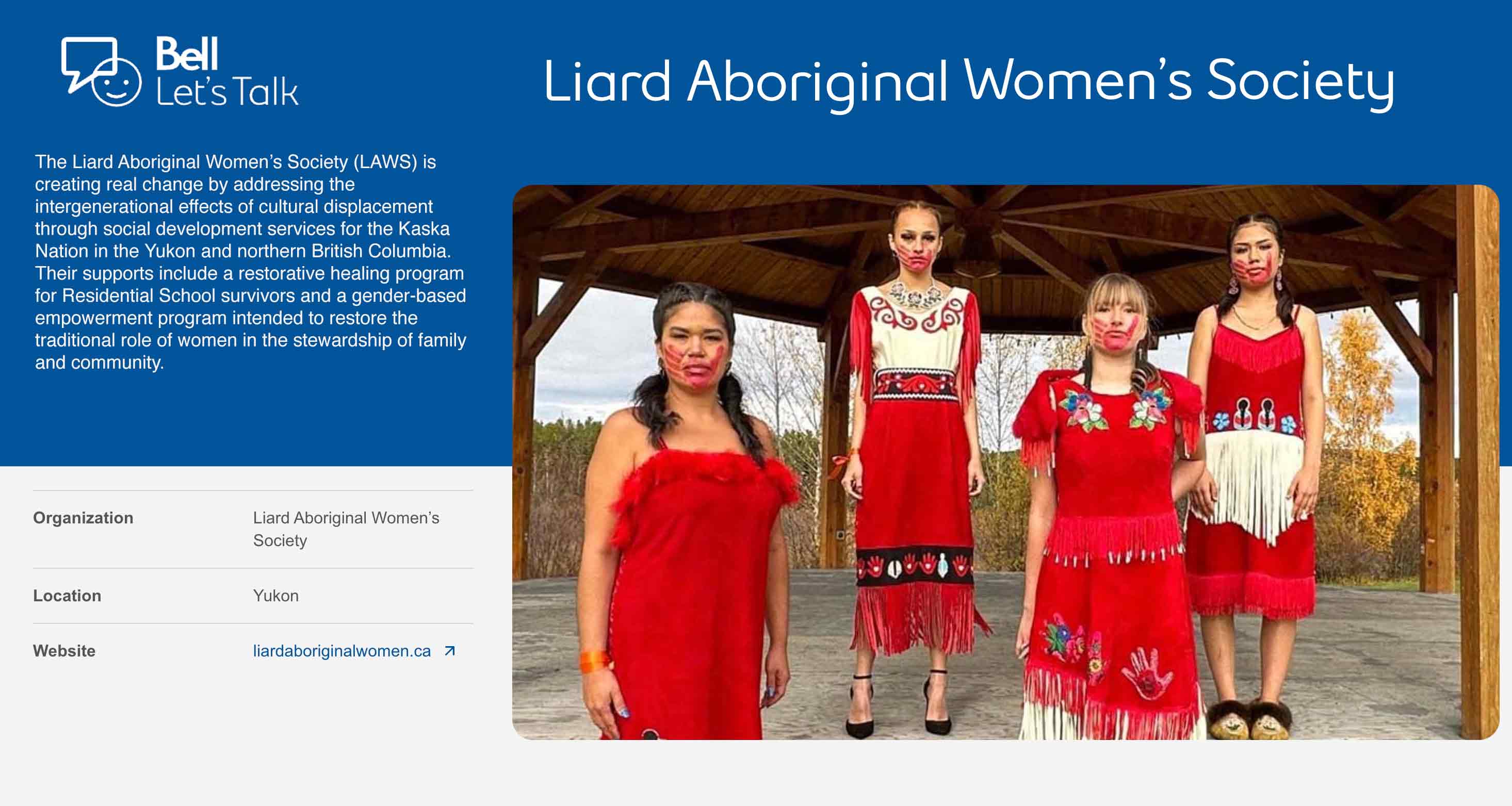
The Liard Aboriginal Women’s Society (LAWS) is a non-profit, charitable, community-based, aboriginal organization providing social development services to the Kaska Nation in the Yukon and northern British Columbia. The organization was established and registered in the Yukon as a non-profit society in 1998. The Society is served by a six member Board of Directors, an Executive Director, and an Administrative Assistant. Offices of the Society are located in Watson Lake, Yukon.

Mainstay programs offered by the society include: a restorative healing program responding to the needs of Residential School survivors and those suffering intergenerational effects; and, a gender-based empowerment program intended to restore the traditional role of women in the stewardship of family, community and the Kaska Nation.

The Society is recognized for its ability to sustain ‘trail breaking’ social development programming in a complex social environment that includes intercultural and political resistance, gender and racial discrimination, cultural displacement, and significant psycho-social impediments including addictions and lateral violence.
Last Updated ( Wednesday, 02 April 2008 07:03 )
Read more...
 

Login Form


Feed Entries